UX Design
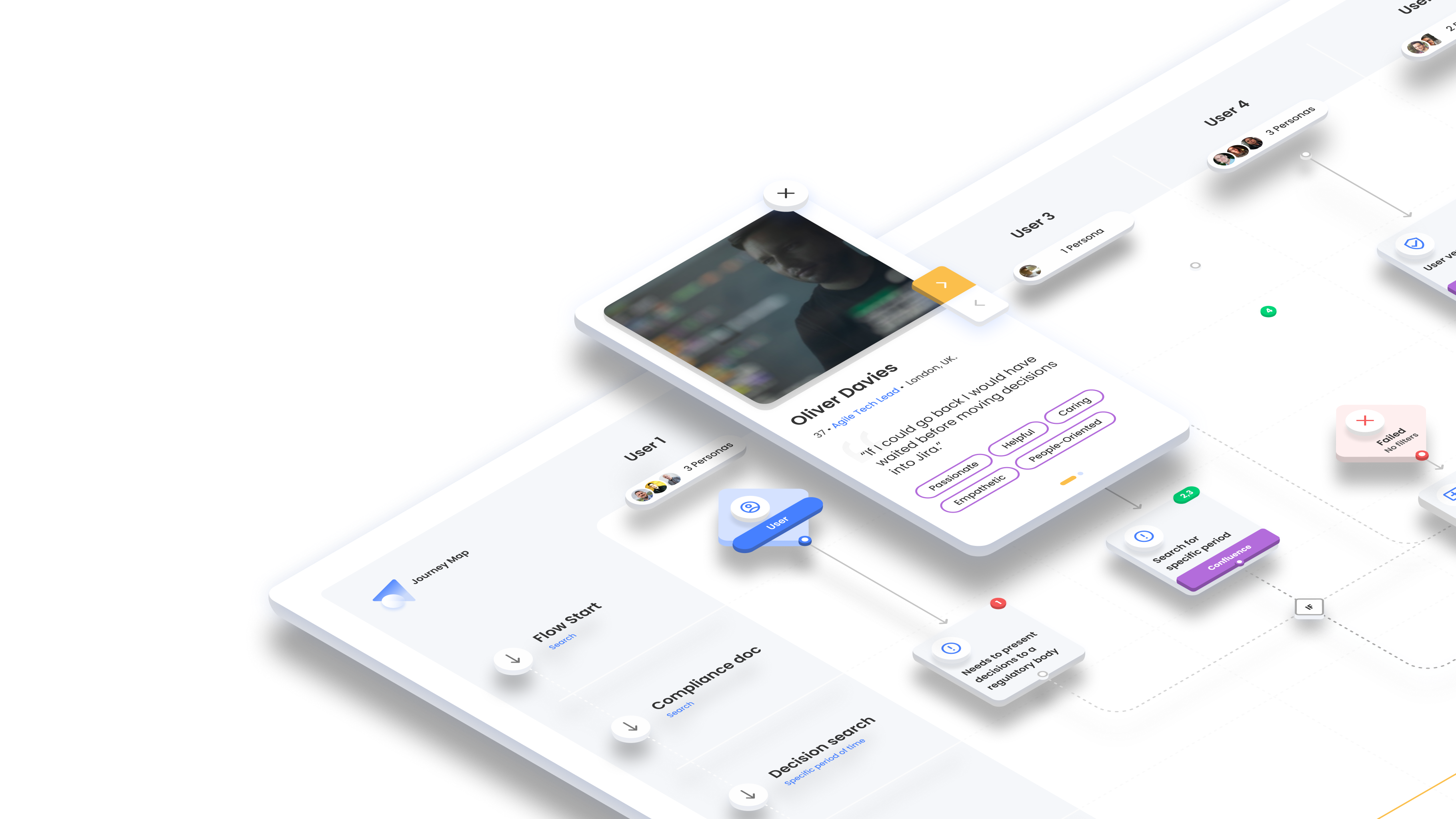
To translate research insights into meaningful experiences, I led the UX design process from concept to validated interaction flows. This included defining user journeys, information architecture, and interaction patterns, and iterating through wireframes and prototypes to test clarity, usability, and accessibility. Design decisions were continuously refined through feedback loops with users and stakeholders, ensuring solutions were intuitive, coherent, and grounded in real-world use.
Categories
Inspiration
Compliance, Science, AI
AI Tools
Coding
Resources
IBM, GenAI




J O U R N A L

October 12, 2024
How to find inspiration and solve big design problems
Read more


October 12, 2024
What makes your design awesome?
Read more


October 12, 2024
How to create SVG-ready icon symbols in Sketch
Read more
Connect
Let’s create your next big idea.
Get in touch
© 2025 Sofía Orellano

All case studies
Topaz Framework
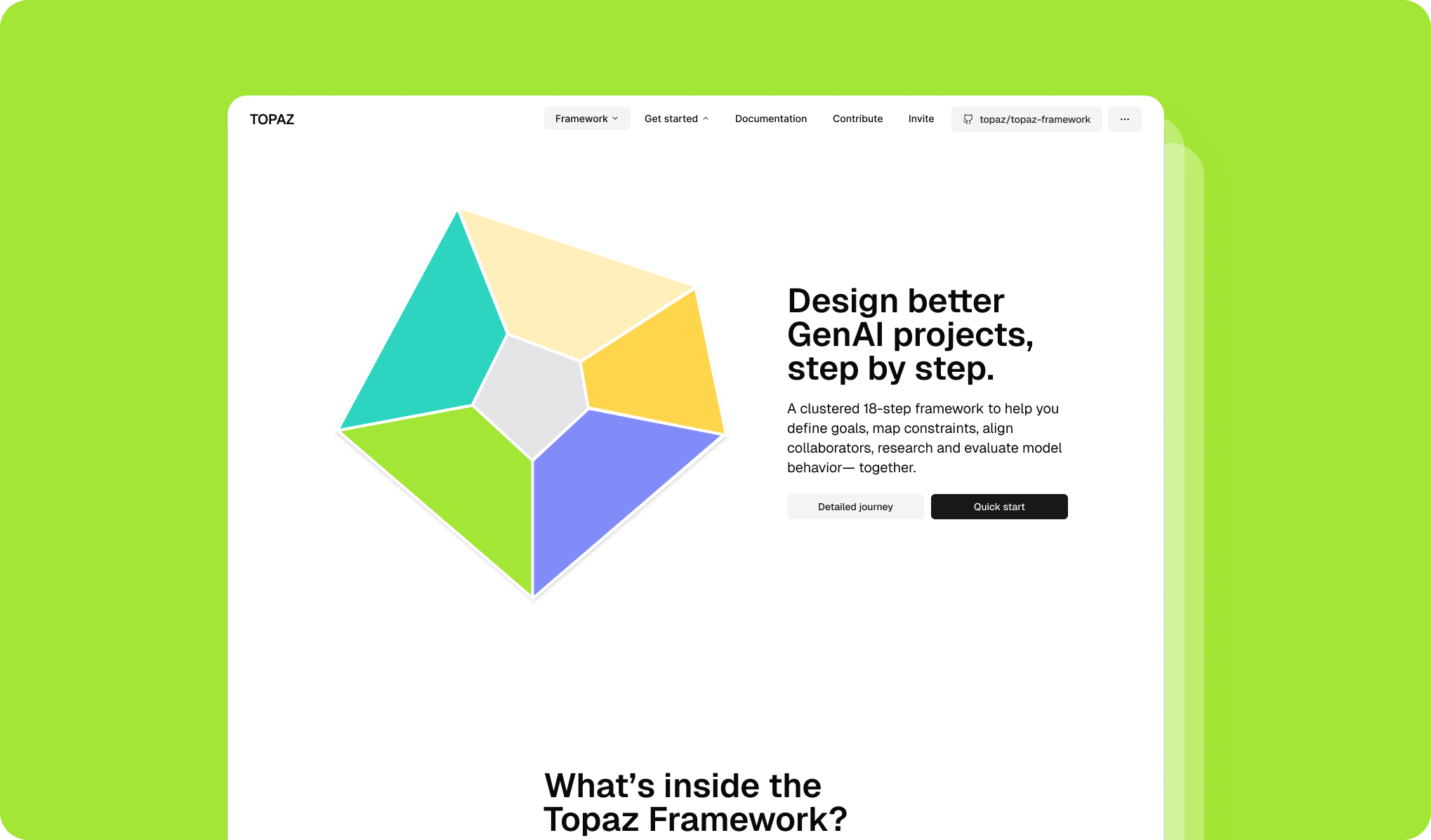
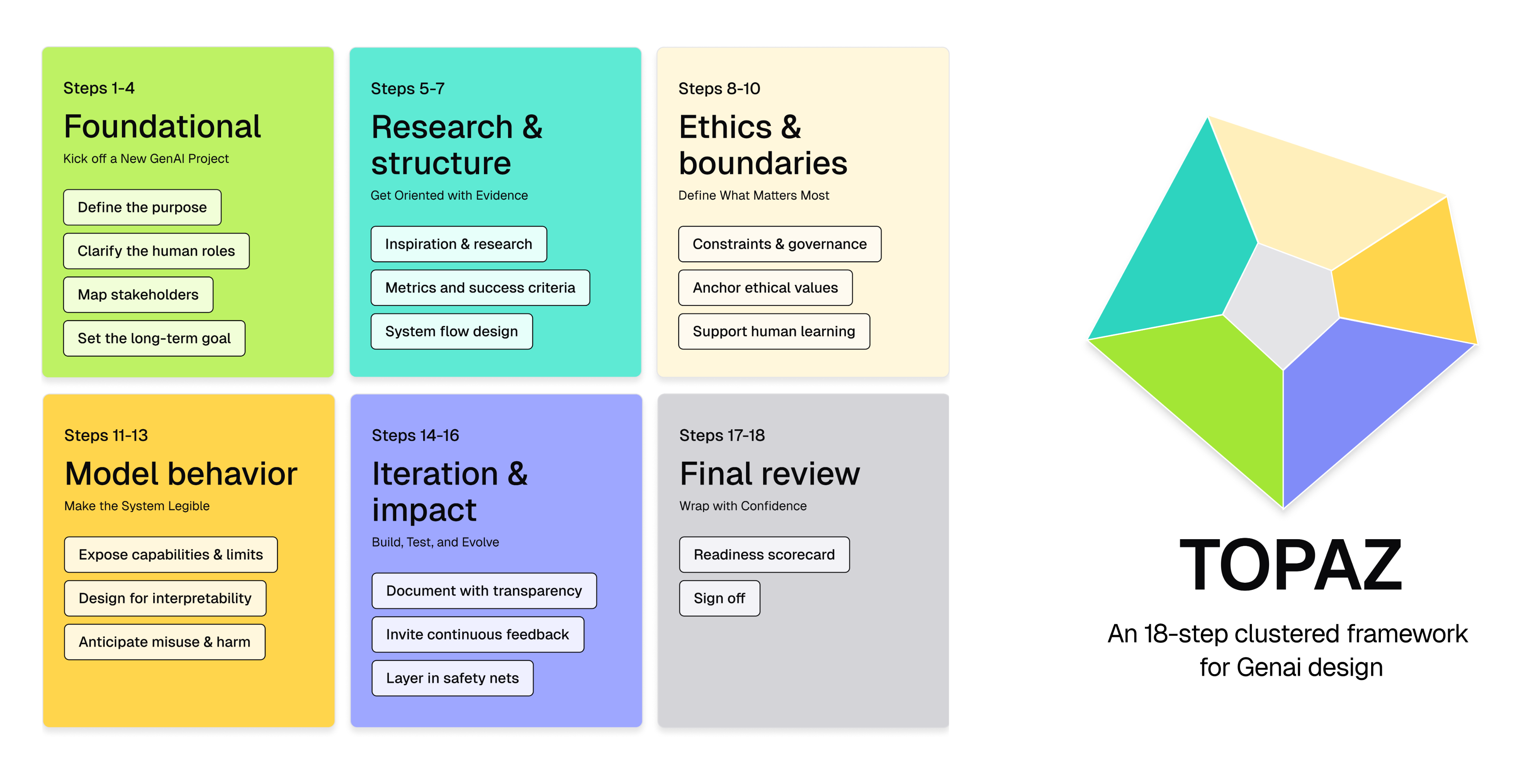
Topaz is a modular, role-aware UX framework developed to help design teams navigate ethical, scalable, and practical GenAI product design.
Client:
Independent Major Project (MA UXD)
Role:
Lead Researcher, Product Designer
Date:
Jan-April 2025
Preview
“You have clearly gone beyond surface reading by engaging 45 participants through surveys, interviews and co-design workshop. Your application of RtD is methodologically rigorous, iterative, and transparent. The Topaz framework demonstrates strong originality, in particular for its role-aware structure, tool integration prompts, and compliance awareness.”
– Dr. Chengcheng Qu, Final Major Project Lecturer, Falmouth University
Key contributions include:
- Modular Framework Design: Created an 18-step UX framework structured into 6 clusters, addressing GenAI-specific challenges as ethical ambiguity, stakeholder alignment, and model unpredictability.
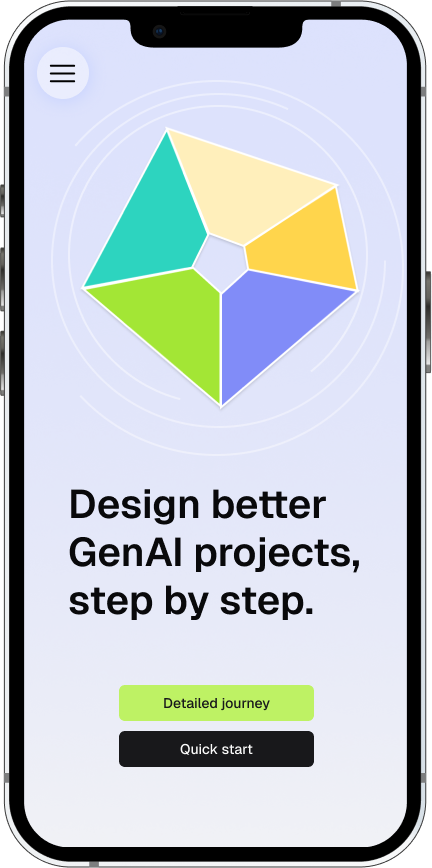
- Role-Sensitive UX Innovation: Developed a system of role-based entry points customised for designers, developers, and product leads, enabling relevance and clarity across diverse teams.
- Research-Through-Design Process: Conducted 45 data entries through surveys, interviews, co-design workshops, and usability testing to iteratively refine the framework around real-world needs.
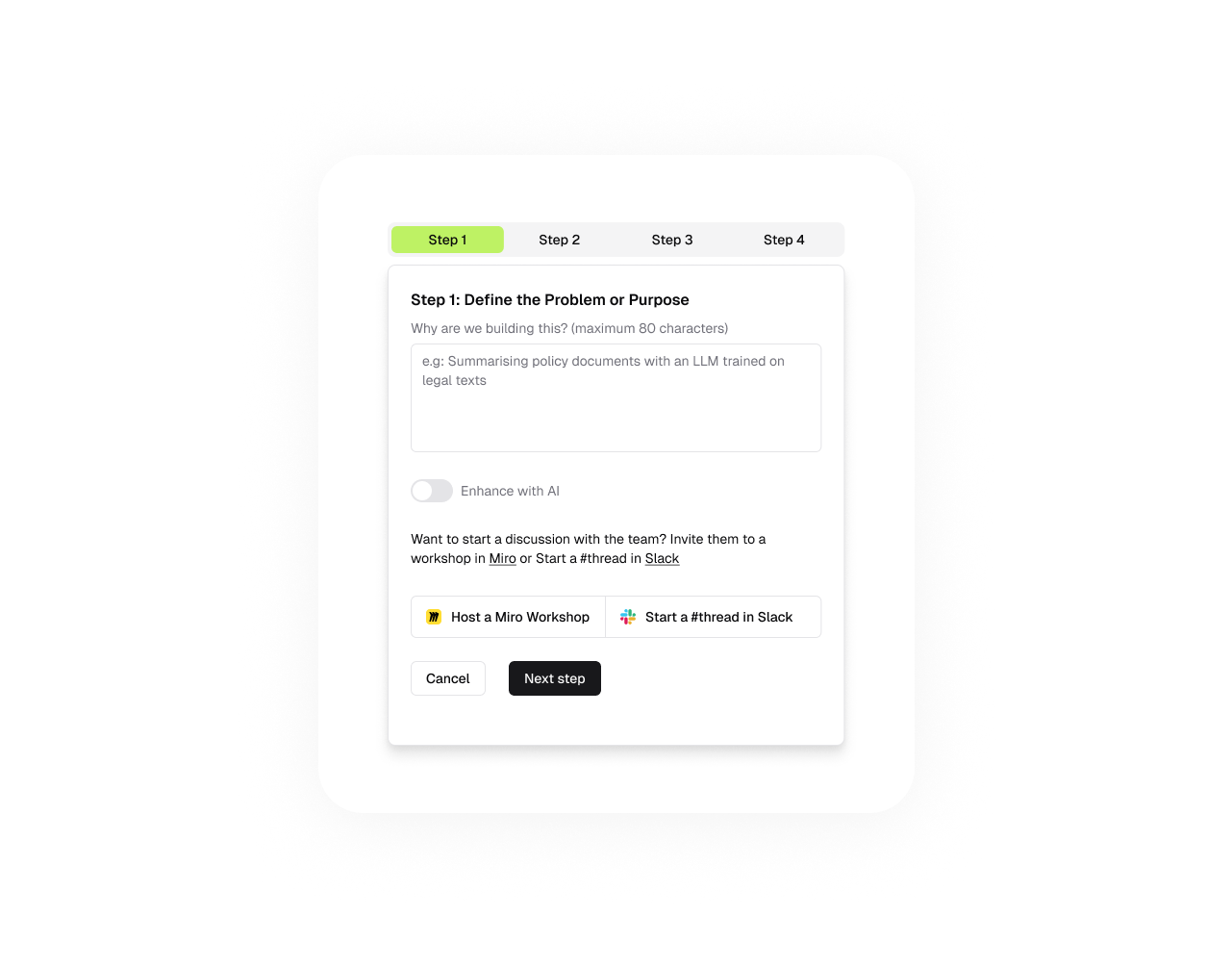
- Practical Ethical Integration: Introduced toggles and prompts for accessibility, compliance, and safety, making ethical design decisions traceable and actionable throughout the development.
- Toolchain Integration: Designed Topaz to embed seamlessly with industry-standard tools like GitHub, Figma, Notion, and Miro, promoting adoption without disrupting existing workflows.
- Evaluative Impact: Received 86% tester approval for real-world use; recognised for modularity and UI clarity, with 77% highlighting the value of the role-based structure and many citing its usefulness in compliance and planning sessions.


UX Design
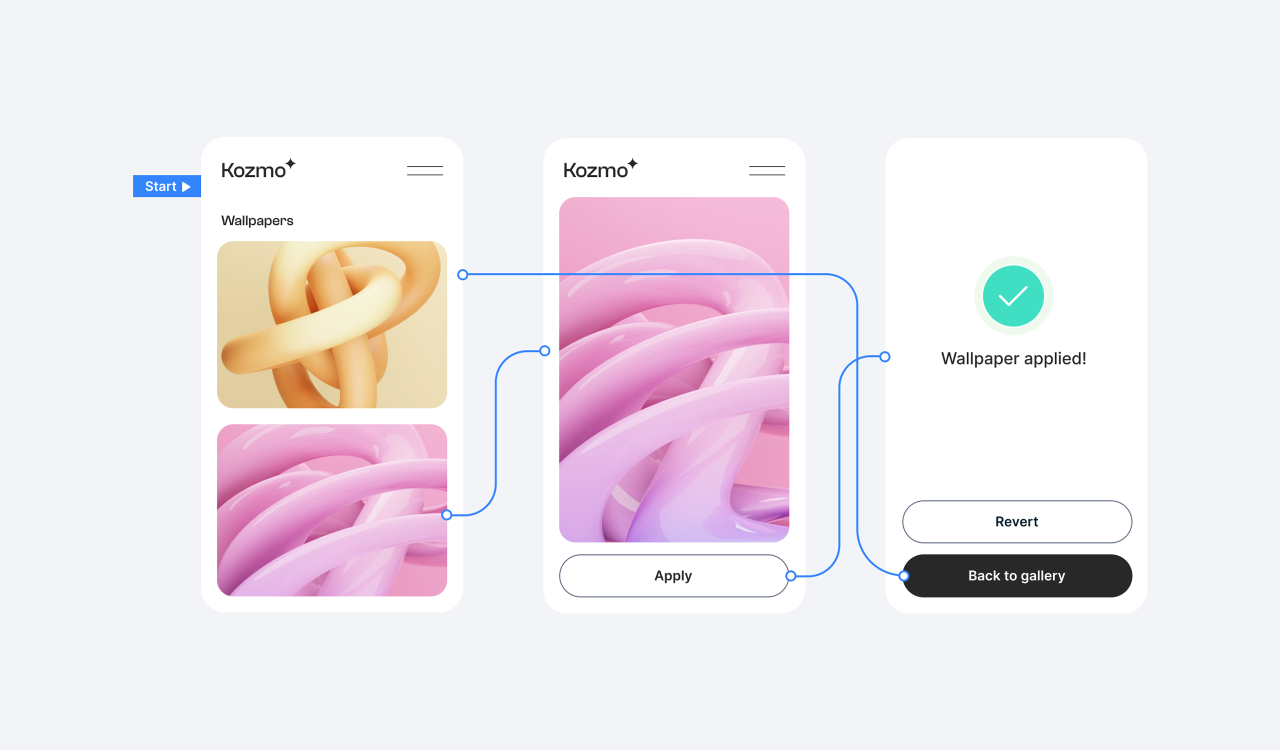
To translate research insights into meaningful experiences, I led the UX design process from concept to validated interaction flows. This included defining user journeys, information architecture, and interaction patterns, and iterating through wireframes and prototypes to test clarity, usability, and accessibility. Design decisions were continuously refined through feedback loops with users and stakeholders, ensuring solutions were intuitive, coherent, and grounded in real-world use.
Categories
Inspiration
Compliance, Science
AI Tools
Coding
Resources
IBM, GenAI



J O U R N A L

October 12, 2024
How to find inspiration and solve big design problems
Read more

October 12, 2024
What makes your design awesome?
Read more


October 12, 2024
How to create SVG-ready icon symbols in Sketch
Read more
Connect
Let’s create your next big idea.
Get in touch
Home
Case studies
About
Contact
Terms
© 2025 Sofía Orellano
All case studies
Topaz Framework
Ut nunc, dui sit sit nisl, cras velit lorem. Laoreet gravida adipiscing augue sit justo elit. Mauris bibendum mattis et diam tellus. Auctor mauris felis lobortis tempus.
Client:
Independent Major Project (MA UXD)
Role:
Lead Researcher, Product Designer
Date:
Jan-April 2025
Preview
“You have clearly gone beyond surface reading by engaging 45 participants through surveys, interviews and co-design workshop. Your application of RtD is methodologically rigorous, iterative, and transparent. The Topaz framework demonstrates strong originality, in particular for its role-aware structure, tool integration prompts, and compliance awareness.”
– Dr. Chengcheng Qu, Final Major Project Lecturer, Falmouth University
Key contributions include:
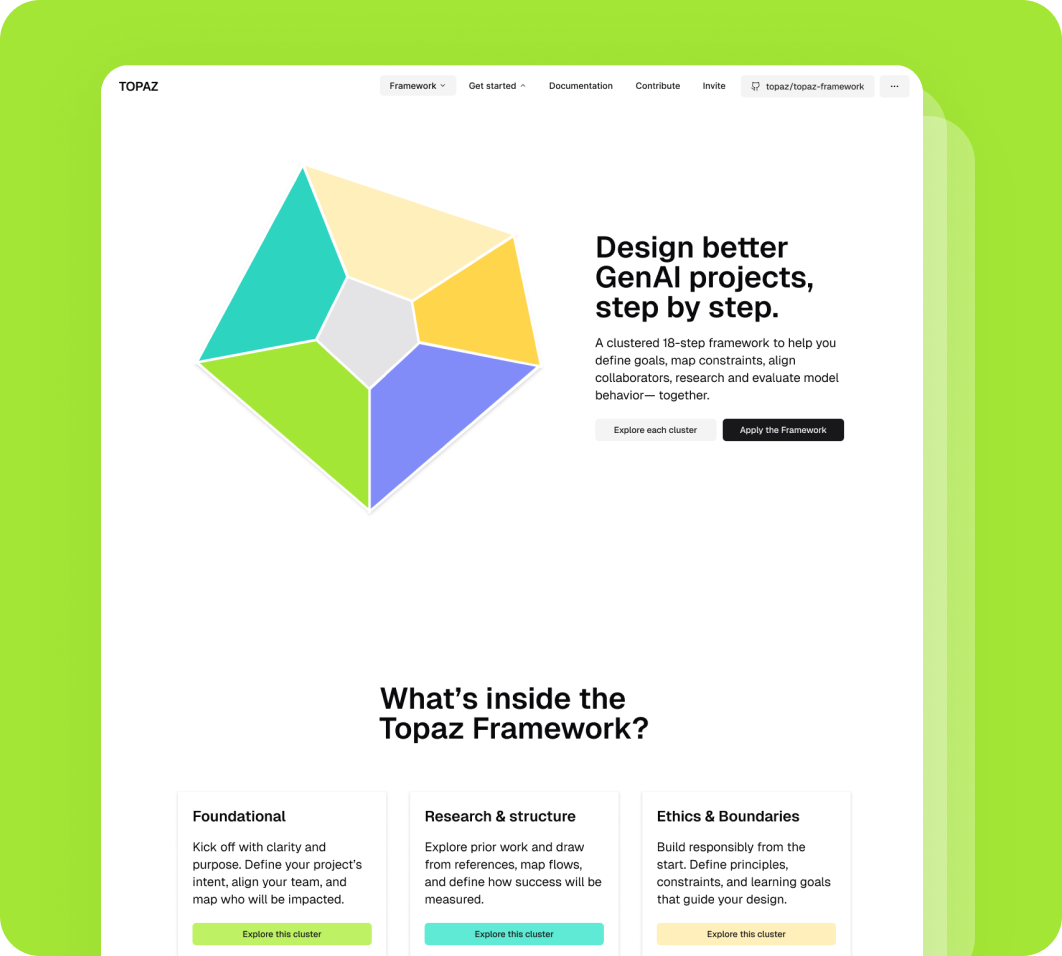
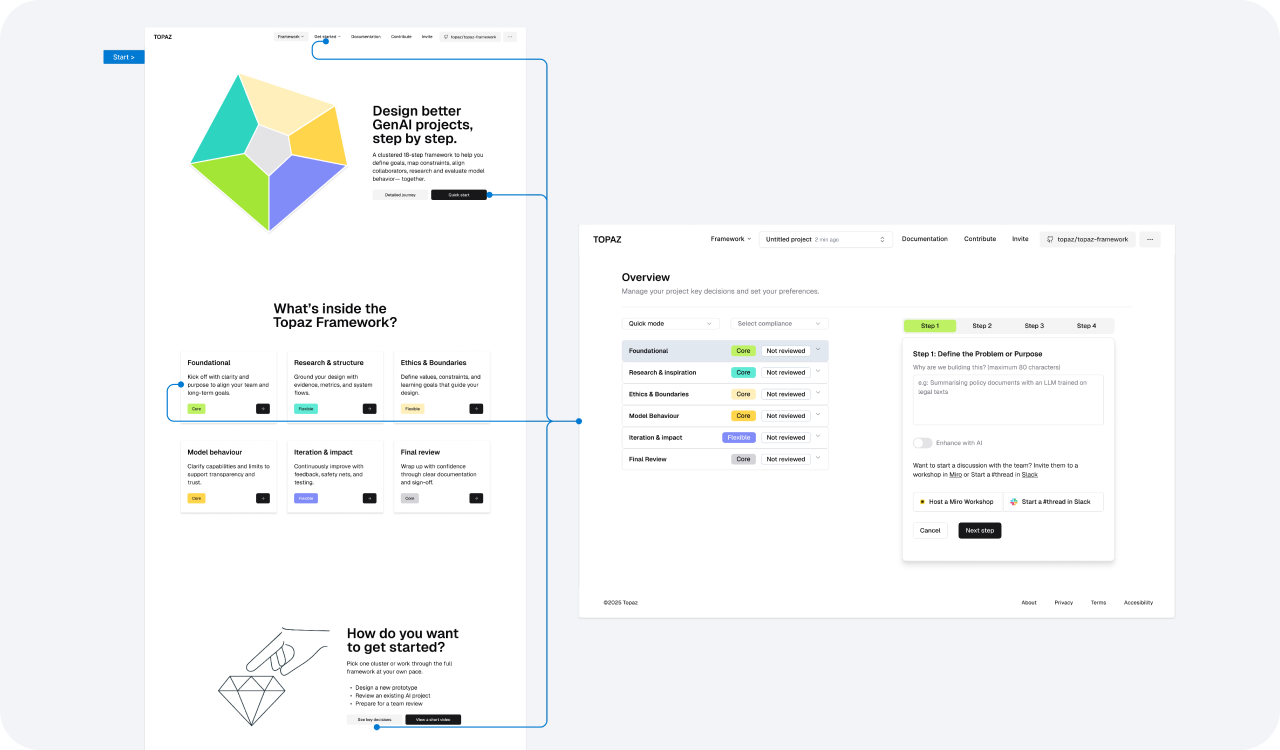
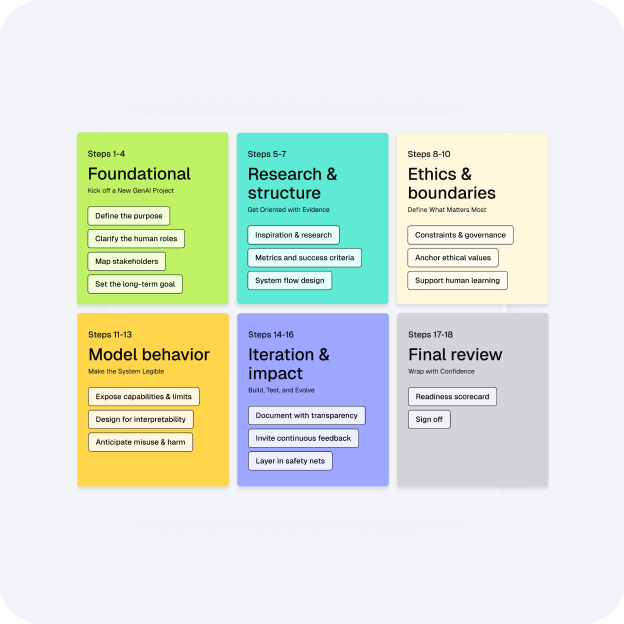
- Modular Framework Design: Created an 18-step UX framework structured into 6 clusters, addressing GenAI-specific challenges such as ethical ambiguity, stakeholder alignment, and model unpredictability.
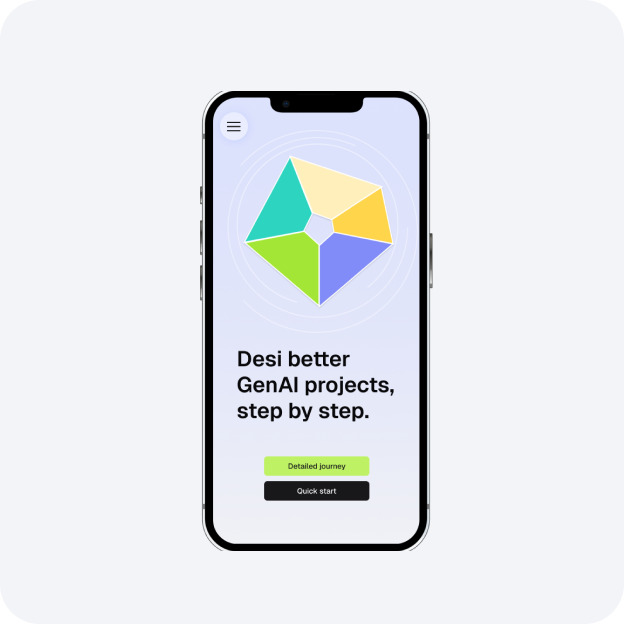
- Role-Sensitive UX Innovation: Developed a system of role-based entry points customised for designers, developers, and product leads, enabling relevance and clarity across diverse teams.
- Research-Through-Design Process: Conducted 45 data entries through surveys, interviews, co-design workshops, and usability testing to iteratively refine the framework around real-world needs.
- Practical Ethical Integration: Introduced toggles and prompts for accessibility, compliance, and safety, making ethical design decisions traceable and actionable throughout the development lifecycle.
- Toolchain Integration: Designed Topaz to embed seamlessly with industry-standard tools like GitHub, Figma, Notion, and Miro, promoting adoption without disrupting existing workflows.
- Evaluative Impact: Received 86% tester approval for real-world use; recognised for modularity and UI clarity, with 77% highlighting the value of the role-based structure and many citing its usefulness in compliance and planning sessions.


Sofia Orellano


Sofia Orellano
UX Design
To translate research insights into meaningful experiences, I led the UX design process from concept to validated interaction flows. This included defining user journeys, information architecture, and interaction patterns, and iterating through wireframes and prototypes to test clarity, usability, and accessibility. Design decisions were continuously refined through feedback loops with users and stakeholders, ensuring solutions were intuitive, coherent, and grounded in real-world use.
Categories
Inspiration
Compliance, Science, AI
AI Tools
Coding
Resources
IBM, GenAI
J O U R N A L
October 12, 2024
How to find inspiration and solve big design problems
Read more
October 12, 2024
What makes your design awesome?
Read more
October 12, 2024
How to create SVG-ready icon symbols in Sketch
Read more
All case studies
Topaz Framework
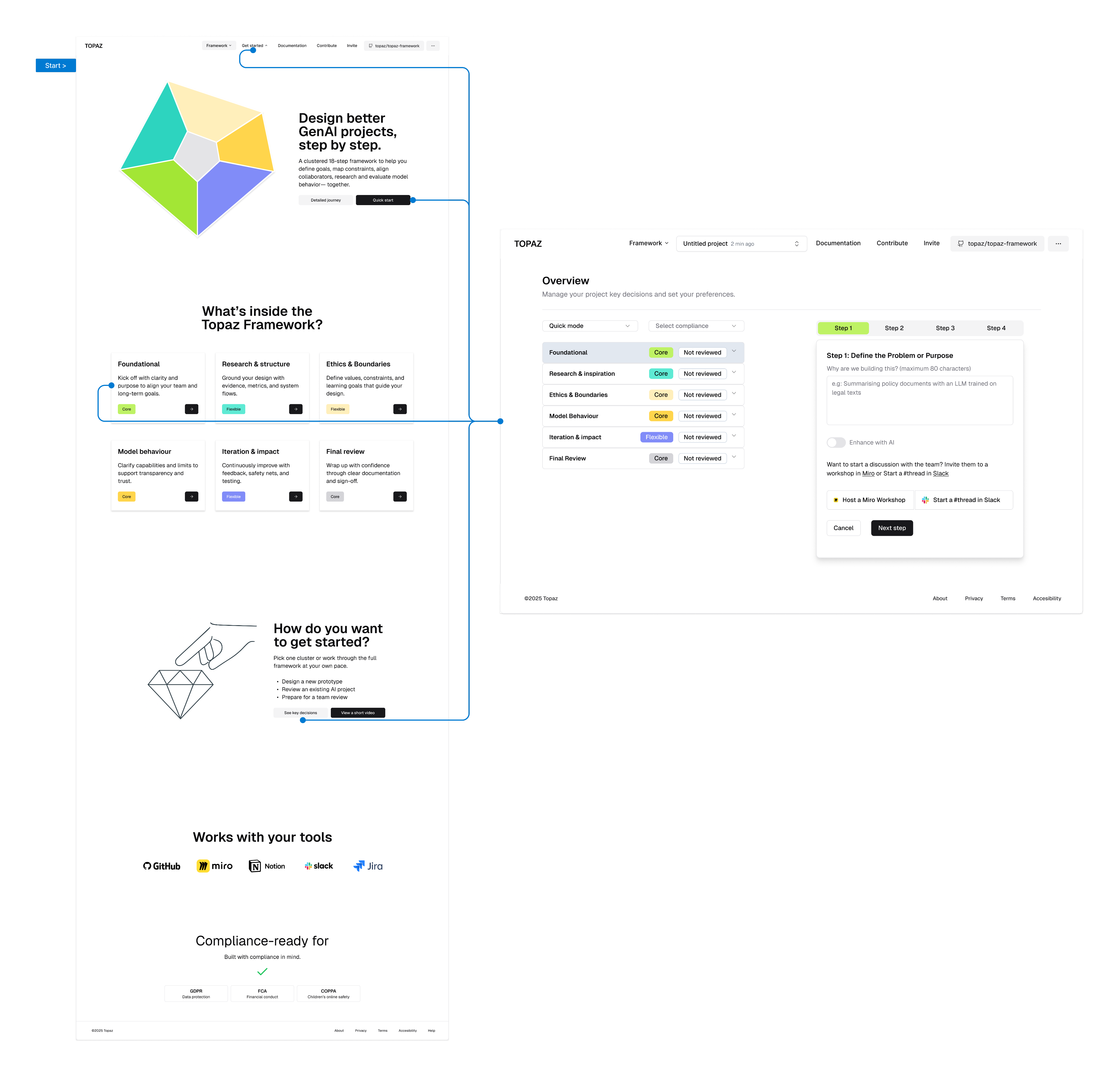
Topaz is a modular, role-aware UX framework developed to help design teams navigate ethical, scalable, and practical GenAI product design.
Client:
Independent Major Project (MA UXD)
Role:
Lead Researcher, Product Designer
Date:
Jan-April 2025
Preview
“You have clearly gone beyond surface reading by engaging 45 participants through surveys, interviews and co-design workshop. Your application of RtD is methodologically rigorous, iterative, and transparent. The Topaz framework demonstrates strong originality, in particular for its role-aware structure, tool integration prompts, and compliance awareness.”
– Dr. Chengcheng Qu, Final Major Project Lecturer, Falmouth University
Key contributions include:
- Modular Framework Design: Created an 18-step UX framework structured into 6 clusters, addressing GenAI-specific challenges as ethical ambiguity, stakeholder alignment, and model unpredictability.
- Role-Sensitive UX Innovation: Developed a system of role-based entry points customised for designers, developers, and product leads, enabling relevance and clarity across diverse teams.
- Research-Through-Design Process: Conducted 45 data entries through surveys, interviews, co-design workshops, and usability testing to iteratively refine the framework around real-world needs.
- Practical Ethical Integration: Introduced toggles and prompts for accessibility, compliance, and safety, making ethical design decisions traceable and actionable throughout the development.
- Toolchain Integration: Designed Topaz to embed seamlessly with industry-standard tools like GitHub, Figma, Notion, and Miro, promoting adoption without disrupting existing workflows.
- Evaluative Impact: Received 86% tester approval for real-world use; recognised for modularity and UI clarity, with 77% highlighting the value of the role-based structure and many citing its usefulness in compliance and planning sessions.
Sofia Orellano