

All case studies
Coda Translator
The Coda Translator is a speculative UX design concept exploring interspecies communication with sperm whales through environmental-centred design, academic research, and machine learning. The project envisions a future where researchers and marine life connect through data-rich interactions. Conducted as part of the MA UX programme, this project blends ecological empathy with speculative prototyping.
“I love your artefact, I just watched it through. I wonder if the suggested interactions with whales could seem more strange and hard to explain—or perhaps some of their thoughts do not centre humans or anthropogenic impacts. I’d love to see more in future iterations. Could I send it to others at CETI? I think they'd love to see their work engaging people like this.”
— Tom Mustill, Author of ‘How to Speak Whale’
Key Contributions:
- Speculative Product Strategy: Developed the core concept, vision, and ethical framing for an interspecies communication tool.
- Research & Environmental Thinking: Synthesised research from marine biology, machine learning, and speculative design to inform product narrative.
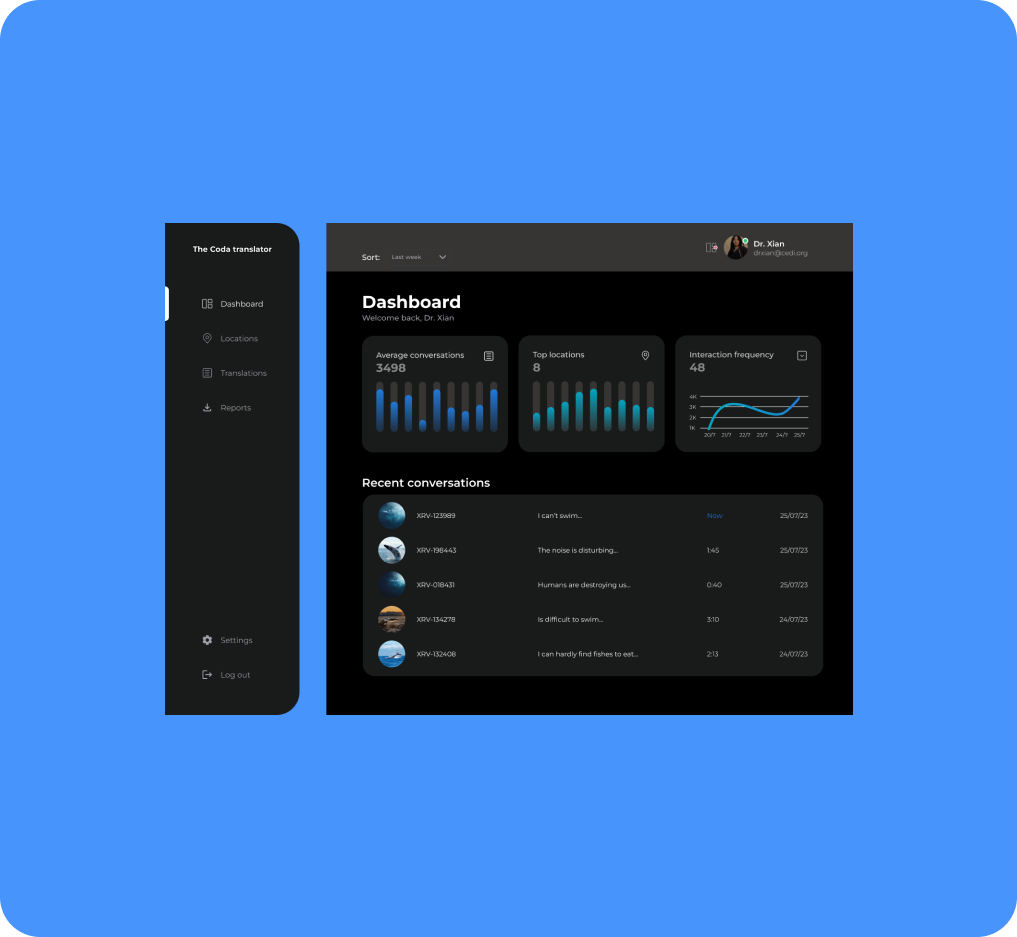
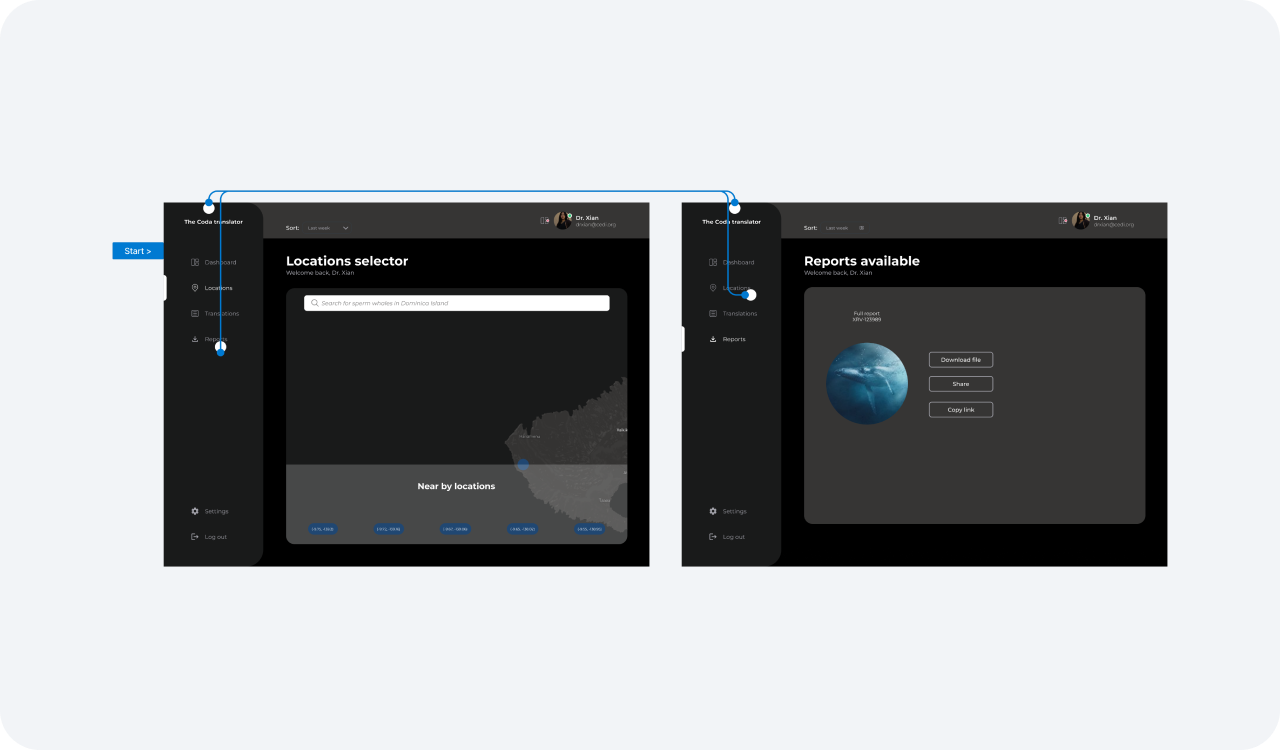
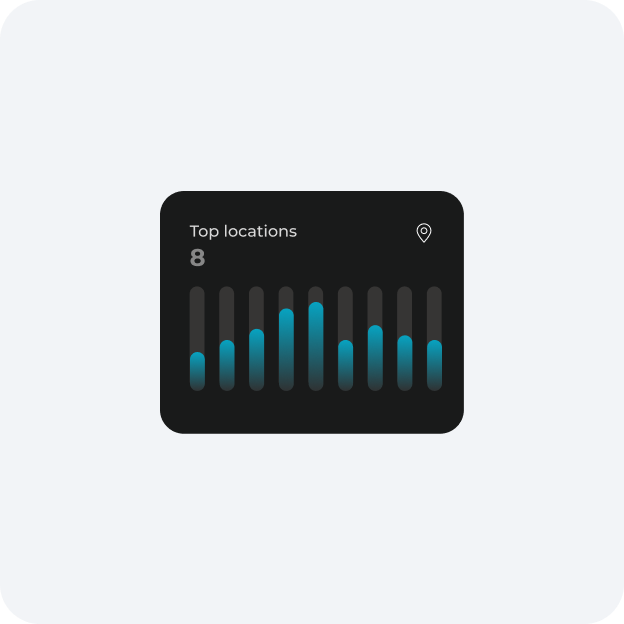
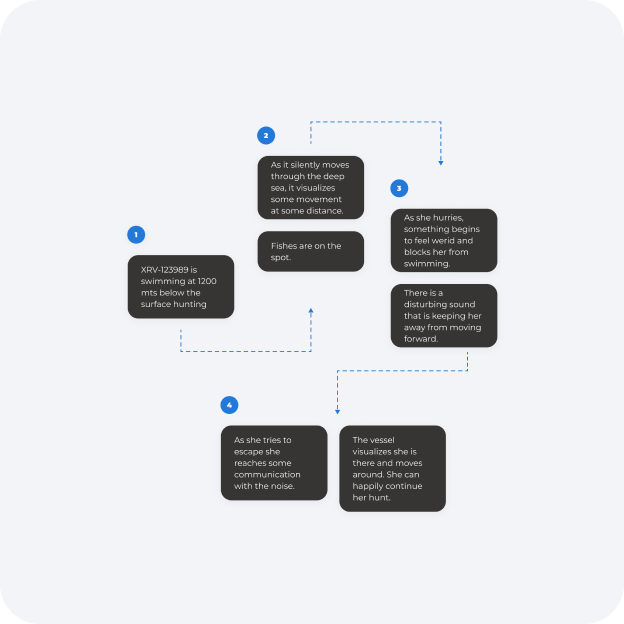
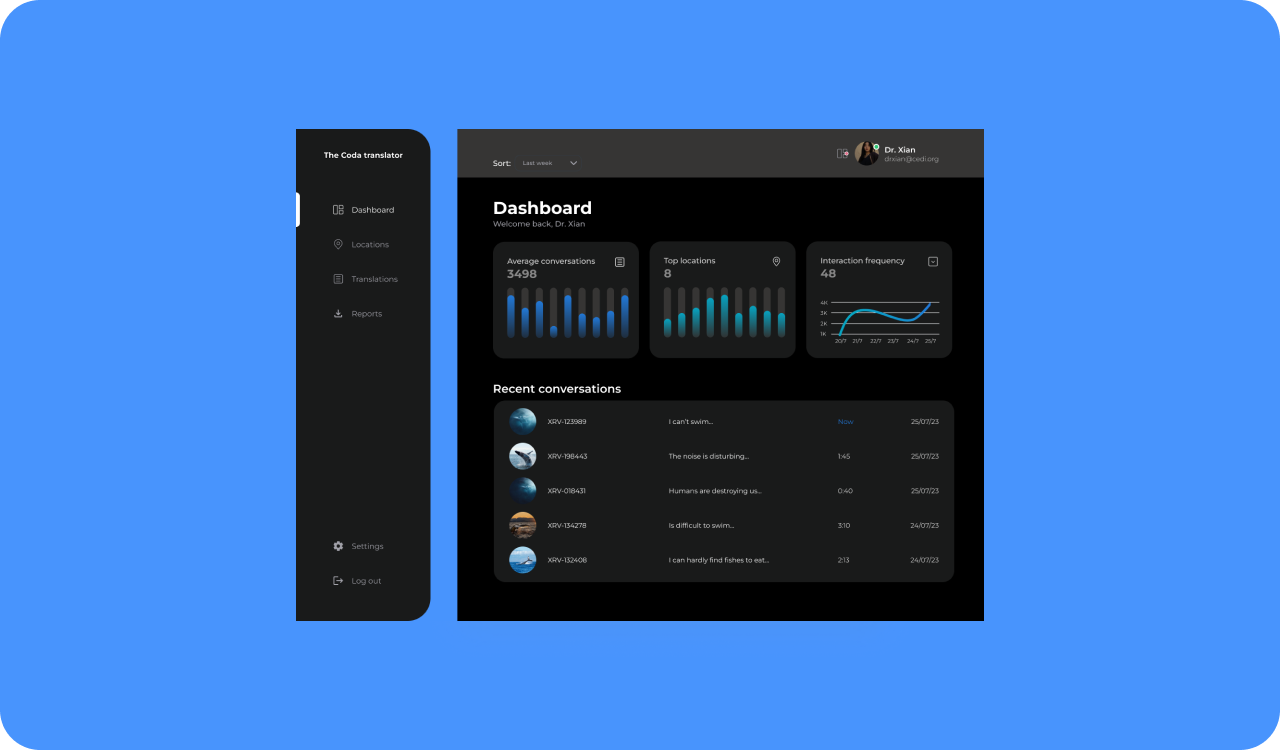
- UX & UI Design: Designed key flows—dashboard, location selector, translation view, and reporting—using a dark-mode aesthetic to match marine themes.
- Prototyping: Delivered high-fidelity mockups in Figma, integrating animated transitions and layered interface logic.
- User Testing: Conducted 8 participant evaluations to gather feedback on interaction expectations and speculative clarity.
- Expert Engagement: Shared project with How to Speak Whale author Tom Mustill and received direct positive feedback.
All Case Studies


Connect
Let’s create your next big idea.
Get in touch


© 2025 Sofía Orellano


All case studies
Coda Translator
The Coda Translator is a speculative UX design concept exploring interspecies communication with sperm whales through environmental-centred design, academic research, and machine learning. The project envisions a future where researchers and marine life connect through data-rich interactions. Conducted as part of the MA UX programme, this project blends ecological empathy with speculative prototyping.
Client:
MA UX Design – Falmouth University
Role:
UX Designer & Speculative Product Lead
Date:
2023
Preview
“I love your artefact, I just watched it through. I wonder if the suggested interactions with whales could seem more strange and hard to explain—or perhaps some of their thoughts do not centre humans or anthropogenic impacts. I’d love to see more in future iterations. Could I send it to others at CETI? I think they'd love to see their work engaging people like this.”
— Tom Mustill, Author of ‘How to Speak Whale’
Key Contributions:
- Speculative Product Strategy: Developed the core concept, vision, and ethical framing for an interspecies communication tool.
- Research & Environmental Thinking: Synthesised research from marine biology, machine learning, and speculative design to inform product narrative.
- UX & UI Design: Designed key flows—dashboard, location selector, translation view, and reporting—using a dark-mode aesthetic to match marine themes.
- Prototyping: Delivered high-fidelity mockups in Figma, integrating animated transitions and layered interface logic.
- User Testing: Conducted 8 participant evaluations to gather feedback on interaction expectations and speculative clarity.
- Expert Engagement: Shared project with How to Speak Whale author Tom Mustill and received direct positive feedback.
All Case Studies


Connect
Let’s create your next big idea.
Get in touch
© 2025 Sofía Orellano
